Use 100% of your data, save 70% of your time.
The intelligence is there on day one. Marquee uses 12 proprietary AI and ML models to read event, physical, off-the-ball and financial data, alongside everything your own stack holds, then scores all of it against your club's sporting DNA. The answer is specific to you.


Define Your Unique Sporting DNA
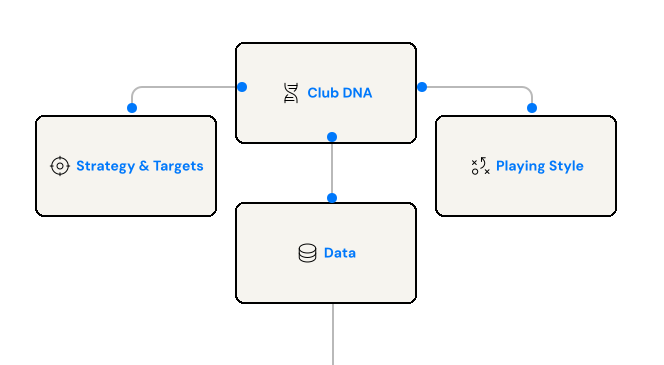
Before any data is processed, Marquee captures what actually makes your club your club: your style of play, your strategic objectives, your financial reality, and the archetypes you want in every position. When football moves, the platform moves with it. A new manager, a new owner, a shift in targets, and the DNA recalibrates within hours rather than staying fixed to a profile the club has outgrown.
Plug In Your Entire Tech Stack
Marquee already reads over 90 competitions across event, physical, off-the-ball and financial sources. Connect your own providers, internal notes, scouting reports and performance records, and everything runs through one decision layer. Data agnostic, no manual data entry.
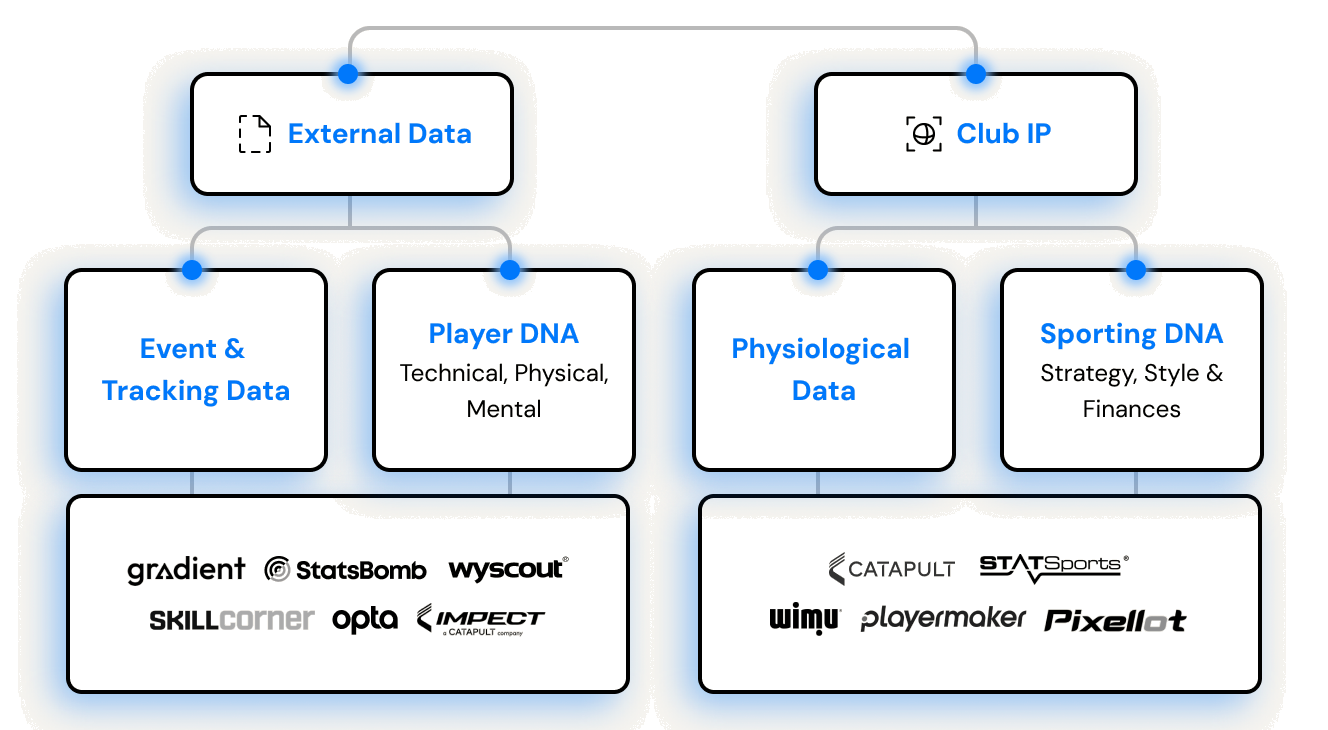
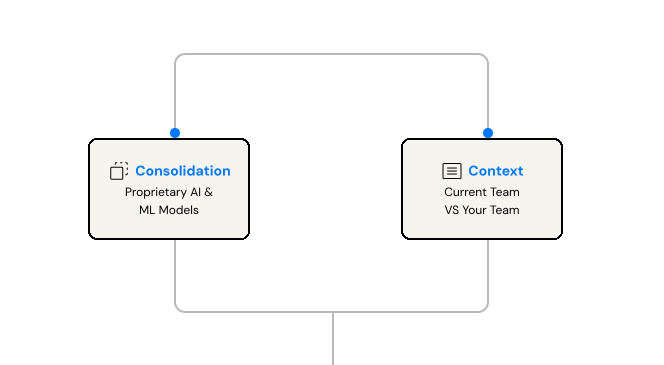
Consolidated and contextualized
Twelve proprietary AI and ML models read millions of data points and contextualize every target against the squad you have and the football you play.
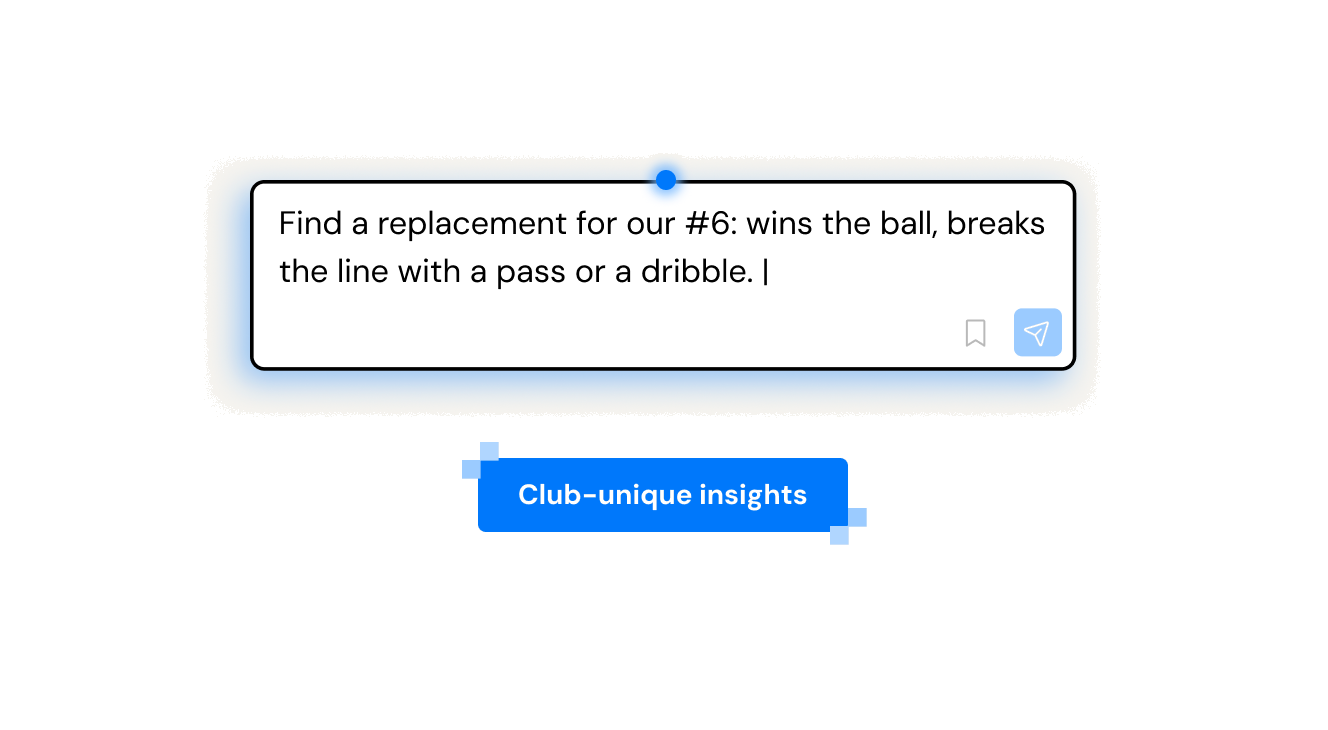
Instant, high-conviction insights
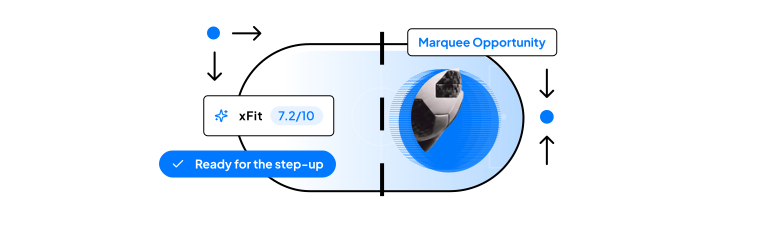
Ask in plain football language and get 360 scout reports, xFit (Expected Club Fit) scores, and ranked shortlists in seconds.
Twelve proprietary models,
co-developed with some of the world's most respected recruitment departments. Everything below runs on them

Introducing xFit, the score that reads a player against your club.
Every player Marquee returns carries an xFit score. It is built from three separate questions, and all three stay visible underneath the number, so you can see which parts of the case are strong and which are not.
System Fit

Reads how a player currently plays, on and off the ball, and compares that signature against the football your team plays. The closer the match, the faster he adapts.
Squad Fit

Measures how a player's profile overlaps and complements the profiles already in your squad, and returns which gaps close and which strengths thin out.
Projected Output

Projects how a player's quality carries into a different league and a different standard of opposition.
Underneath all three, every player is graded against his own league first, then converted onto a single scale that learns how hard each league actually is from the players who have moved between them, rather than from reputation.
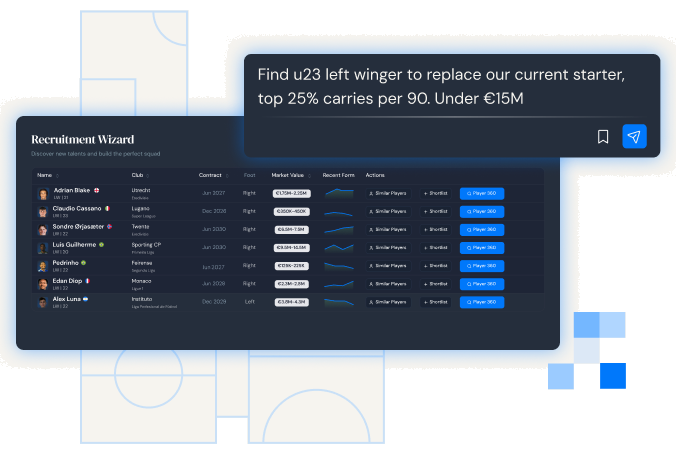
Input football language, get football answers.
Marq reads the request, translates it into the qualities that define it, and searches the global pool against them.
How it works
Every player is graded honestly against the difficulty of his own league, so a standout in a smaller market is not discounted by reputation. Your club is part of the sum: the style you play, the archetype you want in each position, the squad you have, the markets you scout, and what you can afford. Two clubs running the same search get different lists, and every name comes back with the reason it is there.
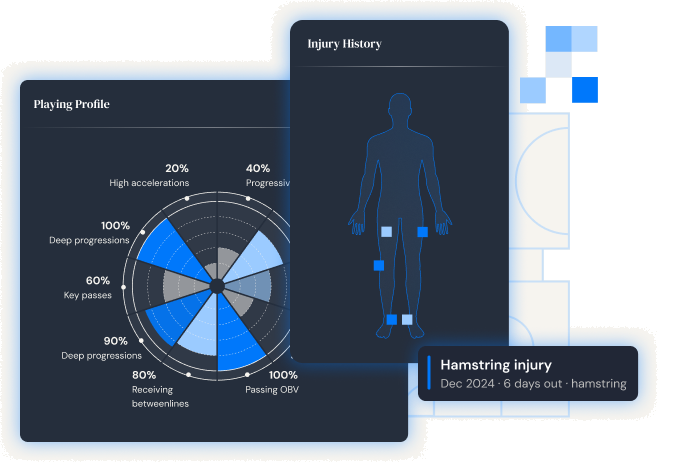
One player, one report, every angle a decision needs.
Performance, physical output, playing style, squad context and deal context in one assessment, written in scouting language rather than statistics.
How it works
Separate models answer separate questions: how good he is once his team and league are accounted for, how that quality would carry into yours, whether he already plays the football you play, and what his profile adds to the group you have. Each answer stays visible in the report rather than disappearing into a summary, and where the evidence is thin, it says so. It closes on character assessment and public perception, the parts of a signing that sit outside the numbers and usually surface too late.
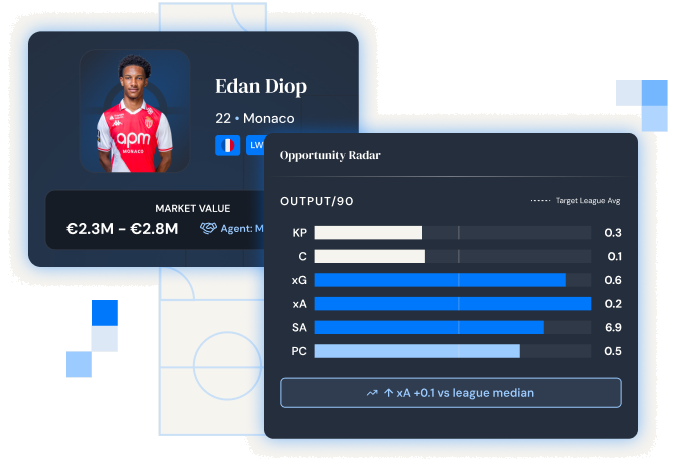
A digest, not a feed.
Most transfer opportunities open and close before anyone outside the selling club notices. Radar watches the situations that put players into play and checks each one against your club before it reaches you.
How it works
Contracts running down, minutes drying up, clubs under financial or sporting pressure, all filtered against your squad, your style, your level and your budget. What arrives is the small number of names that would improve your team and could realistically be signed, with the reasoning attached.
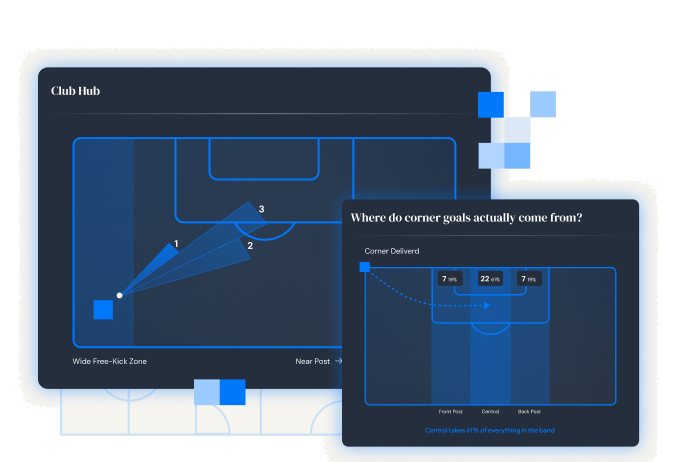
Recruitment starts with your own squad, not the market.
Club Hub shows where the group is thin, where it doubles up, and where the next twelve months will open a hole nobody has planned for.
How it works
Contracts, ages, minutes, profiles, development trajectories and availability sit in one view, so a position that looks covered today but empties out next summer is visible now rather than in the window. Analyze your own squad the way you analyze the market: who is progressing, who is carrying load, who is at risk. Drop a target in and see what changes. Run a full window with several arrivals against your budget and your depth. Ask a question about your own team in plain language.
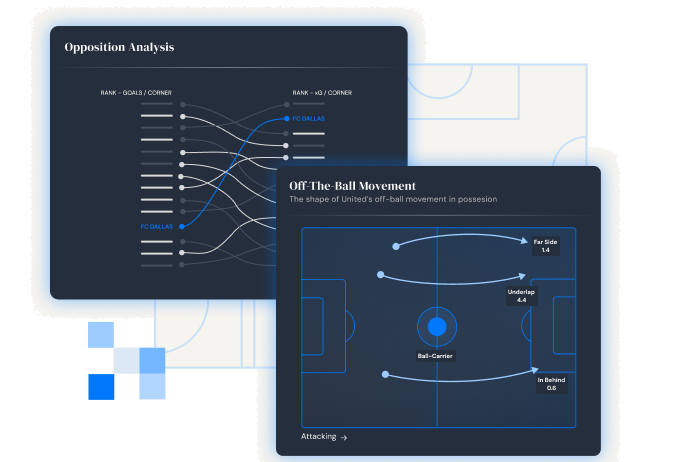
Know what you are walking into.
Opposition Hub builds a picture of how an opponent actually plays, from match data rather than reputation, and sets it against the way your team plays.
How it works
It names where they are strong, where they are exposed, and which of your players the matchup favours. The same reading of style that tells you whether a signing fits your football tells you how the team in front of you will try to hurt you.
Every role, back to the game.

Sporting and Technical Directors
Know what a signing does to the squad before you spend a day on it.

Heads of Scouting and Data
The whole market contextualized to your club's DNA, so your scouts look where it matters.

Scouts
Every player pre-read against your club, so you scout the ones you judge worth it.

Analysts
Every source pulled and normalized into one profile, so you analyze the game and not spreadsheets.